
See how upgrading electrical systems, including PLCs, helps reduce power and service disruptions and increases equipment life expectancy when modernizing a WWTP.

Eaton offers hundreds of products, including PLCs, to deliver industrial controls solutions. Take a look at all things industrial controls.
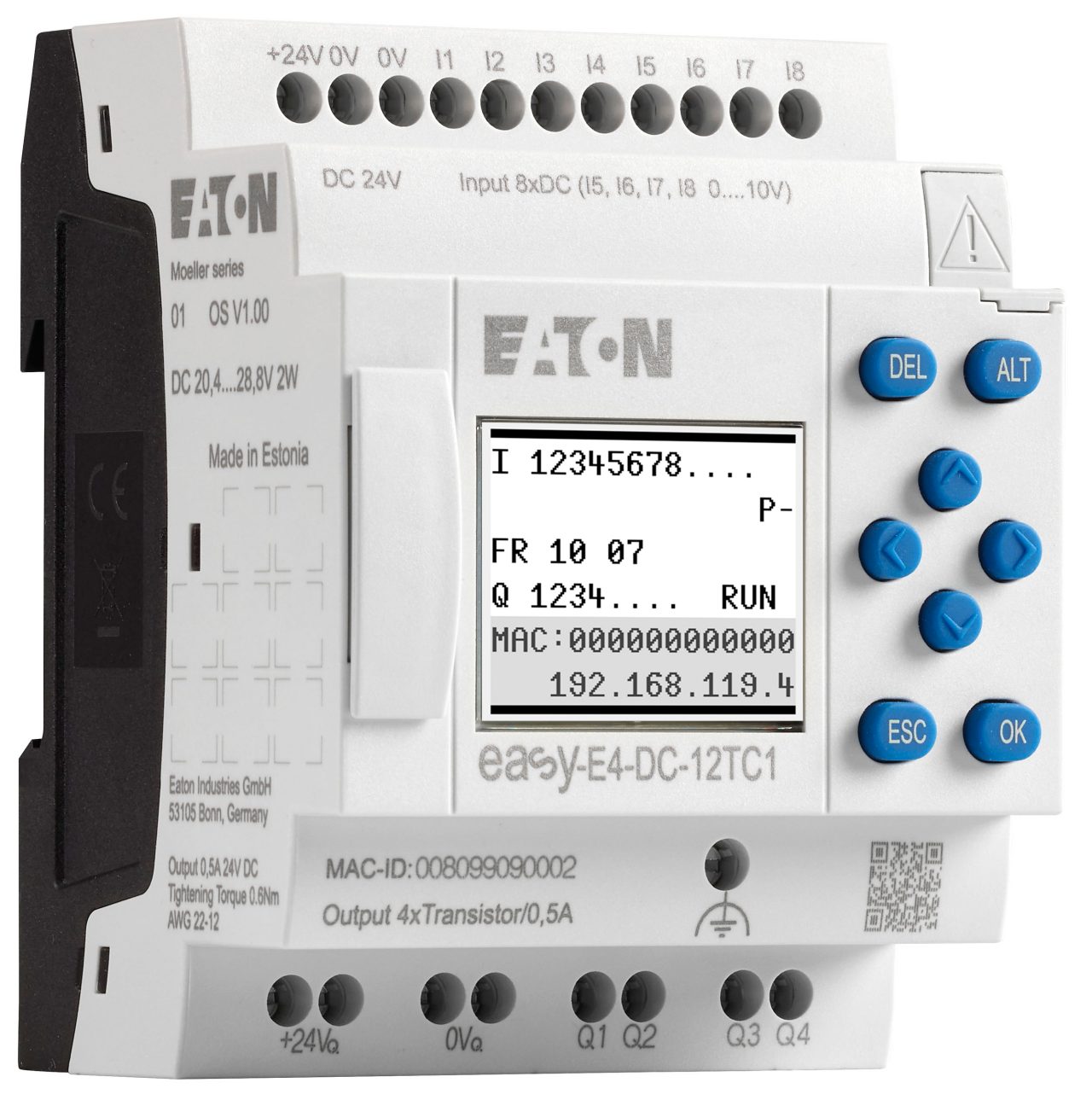
Programmable logic controllers (PLCs) are solid-state, electronic devices that control the operation of a machine or process.
They use logic functions, that are programmed into their memory via programming software. In simple terms, a PLC is the “brains” behind an automated process.
PLCs are designed to monitor inputs from sources like pressure sensors, temperature sensors, limit switches, auxiliary contacts, and pilot devices.
Based on the status of these inputs (on/off, voltage value between O and 10 V or amperage value between) and 24 mA, the PLC runs these inputs through its programming. The PLC will execute the programming by updating its outputs such as starting a motor, turning on a pilot light, or changing the speed of a conveyor. PLCs are designed for multiple input/output (I/O) arrangements.
PLCs are general-purpose controllers that can control and monitor any industrial machine or process.
Step 1 – Reading Input status
The PLC takes a snapshot of each input to determine whether it's on or off and writes it into memory.
Step 2 – Execute the program
The PLC executes your program one instruction at a time using the input states in memory.
Step 3 – Updating output
Finally, the PLC updates the status of the outputs based on which inputs were on during the first step and the results of executing your program during the second step.
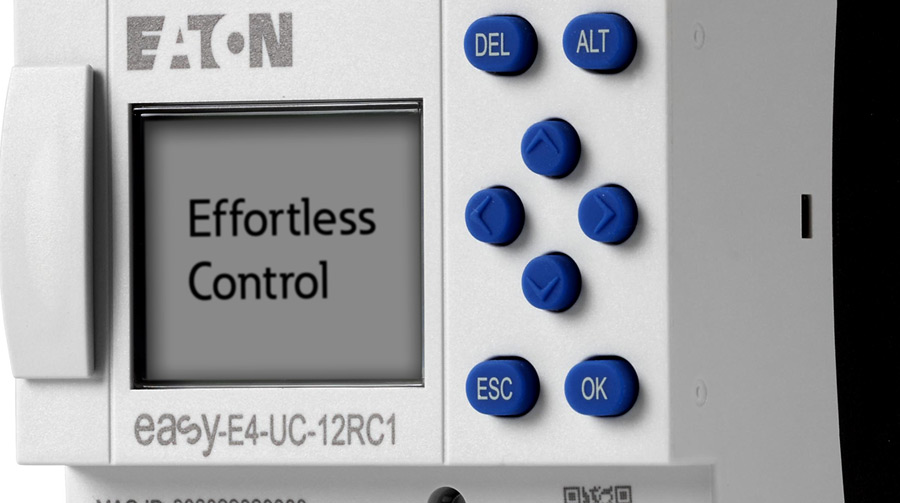
A Brick PLC has an integrated CPU, an input/output and a power supply. Inputs are hardwired to devices monitored by the PLC. Outputs are hardwired to devices controlled by the PLC.
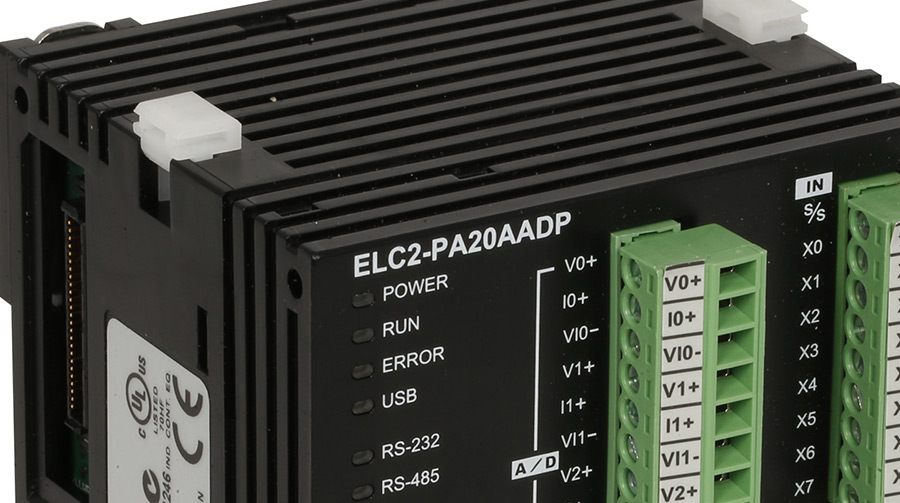
A Modular PLC has a separate CPU module, input/output (I/O) modules and a power supply. Mix and match I/O modules as needed. Inputs are hardwired to devices monitored by the PLC. Outputs are hardwired to devices controlled by the PLC.


 发送电子邮件

 MyEatonFAQs



